A glove order has three decisions hiding inside it: which product is appropriate for the task, which sizes the people using it need, and how much to buy. Getting one right does not automatically settle the others.
Material names and colors are useful search terms, but neither is a complete specification. A product’s intended use, labeling and documented characteristics should guide the choice. For a facility, the appropriate clinical, safety or purchasing lead should approve the product for the work involved. This buying guide helps you organize that decision and place a clearer order.
Identify the task first. Check the product label and supporting documentation. Then choose the size mix and the selling pack.
Read the label before comparing materials
Medical examination gloves, general-purpose gloves and gloves intended for particular chemical or specialty tasks should not be treated as interchangeable. The FDA describes medical gloves as single-use protective equipment with specific intended uses. A glove’s color does not establish that it is suitable for a medical procedure or a particular chemical exposure. Read the FDA’s medical glove guidance.
When reviewing a product, ask for its exact name, material, size range, intended-use labeling and relevant documentation. If the work calls for a specific test or rating, check that exact claim for that exact product. Avoid carrying an approval from one glove in a range over to another simply because the boxes look similar.
Make material part of the decision
Vinyl, nitrile and blended gloves describe different material choices. Those words do not replace a product-specific assessment. Fit, thickness, construction, labeled use and the demands of the task all affect the decision. A sensible comparison keeps those details together rather than ranking every glove by material alone.
Where natural rubber latex allergy is a concern, the FDA points to synthetic alternatives and recommends checking the package material labeling. Confirm the suitability of the chosen product with the responsible care or safety professional. “Latex-free” does not mean that every possible sensitivity has been ruled out.
| Question | What a useful answer includes |
|---|---|
| What is it intended for? | The use stated on the exact product’s labeling. |
| What is it made from? | The material and relevant package statements. |
| Does the task require a specific rating? | Documentation for the particular product, not a general material claim. |
| Which sizes are needed? | A tested size mix for the people who will use it. |
| What am I purchasing? | Gloves per box, boxes per case and total count. |
Build the size mix from your team
Ordering equal quantities of every size is easy, but it may not reflect the people doing the work. Start with current usage by size, then ask for feedback on fit. Review whether a size appears to move slowly because few people need it or because it is stored where staff do not see it.
Before switching to another product, check the manufacturer’s size guidance and evaluate fit with the users. A label such as “medium” is a starting point, not a guarantee that every design feels identical. Keep approved sizes clearly separated and marked in storage so the correct box is easy to find.
For home purchasing, a smaller initial pack may be more practical than committing to a large quantity of an unfamiliar fit. For a facility, a documented trial should include the authorized team members who can evaluate suitability and approve the change.
Count gloves, boxes and cases separately
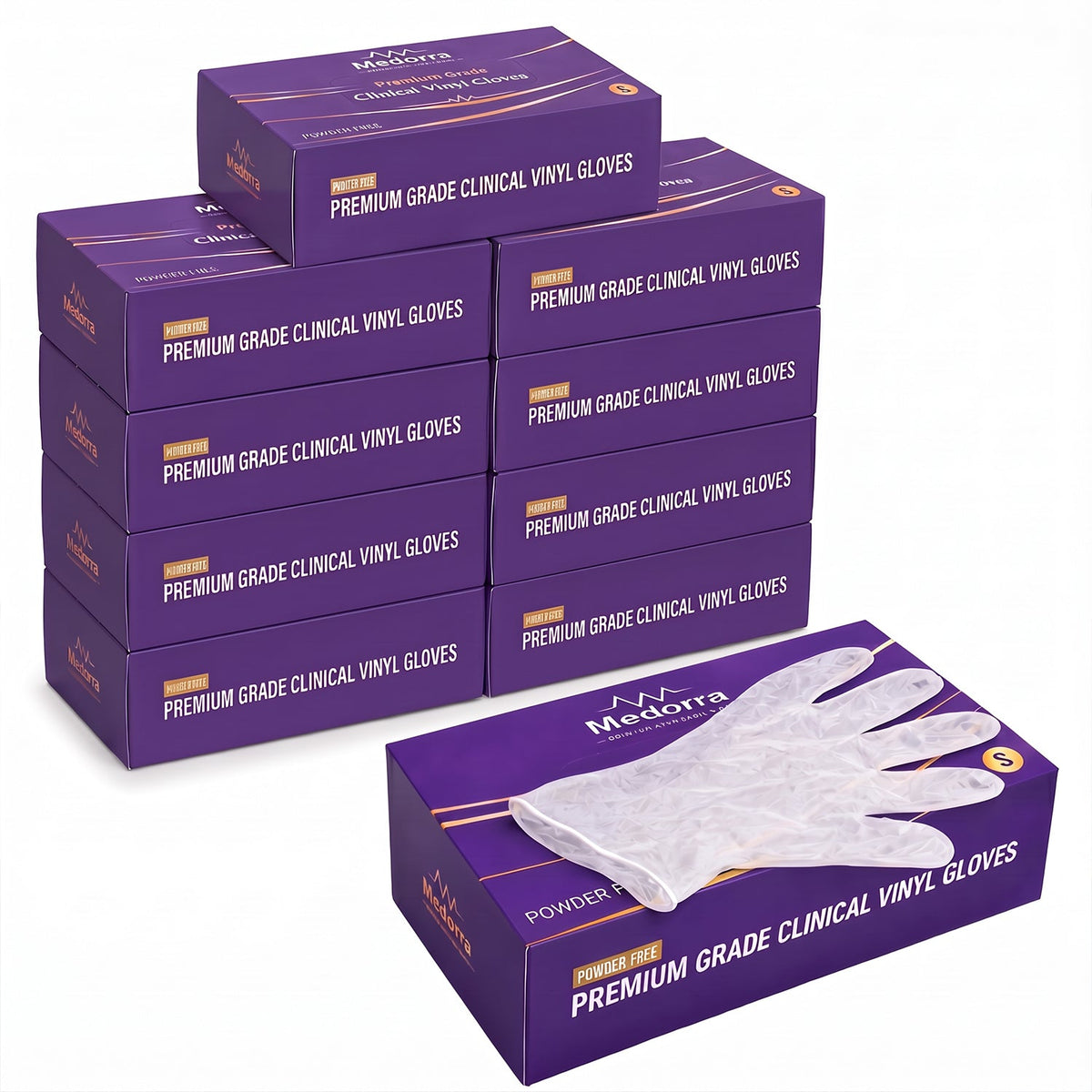
A listing for 1,000 gloves usually describes individual gloves, not 1,000 pairs. Always check the stated count. If a case contains ten boxes of 100 gloves, the case contains 1,000 individual gloves. Do not assume another case uses the same box count or that all sizes have identical packaging.
Six cases × ten boxes × 100 gloves = 6,000 gloves. If you are budgeting in boxes but ordering in cases, keep both quantities on the purchase request.
Compare prices on the same basis, then confirm that the products are genuinely suitable alternatives. A cost-per-glove calculation does not establish equivalent protection or performance. Freight and any account-specific terms also belong in the final purchasing comparison.
Keep purchasing connected to correct use
The FDA advises that medical gloves should not be reused, washed or disinfected, and that torn gloves should be changed. Follow the product’s instructions and your organization’s hand-hygiene and glove-use procedures. FDA: what to know before using medical gloves.
Store cartons according to the manufacturer’s directions and maintain visibility of any expiry or lot information needed by your operation. Record the SKU in the approved list and track usage in one consistent unit. When stock looks unexpectedly high or low, check the box-to-case conversion before assuming demand has changed.
Make the order easy to check
- Confirm the approved product and labeled use.
- Choose each size and its quantity separately.
- Verify individual gloves per box and boxes per case.
- Match the item code to the selected size.
- Review the delivery address and receiving needs.
- Keep the approved product reference for the next order.
Medorra offers glove options with size and pack details. Retail shoppers can review available products online; facilities can discuss their approved assortment and negotiated purchasing needs. If a required specification is not clear on a listing, ask for confirmation before choosing it for a specialized task.
Choose your size. Confirm your pack.
Review the available glove options or discuss a size mix for your facility.
Explore vinyl glove options →Discuss facility glove purchasing →