Two wipes can look similar in a photograph and belong in completely different routines. One is intended for personal care. Another is labeled for a surface. Choosing well starts by separating those purposes before comparing price or pack size.
For households, that means buying the product suited to the job and keeping it clearly identified. For facilities, it also means making the approved assortment easy for staff to recognize, store and reorder. A simple product name, the correct label and a clear pack count are more useful than a long list of loosely related claims.
Confirm whether the product is for skin, routine surface cleaning or labeled surface disinfection. Follow the exact product’s directions; these categories are not interchangeable.
Ask three questions before opening a case
First, what will the wipe be used on? Second, what result is required? Third, what do the product’s directions actually permit? These questions keep a purchase focused. A larger wipe or a convenient resealable pack can be attractive features, but they do not establish that the product is appropriate for a particular use.
For personal-care products, review intended use, ingredients, fragrance information and any relevant precautions. For a facility, the responsible care team should approve products used in its care routines. Packaging that says “unscented” or “sensitive” should not be treated as a guarantee that an individual cannot react to an ingredient.
Know which type you are comparing
| Type | Typical buying question | Keep in mind |
|---|---|---|
| Pre-moistened personal-care wipe | Is the size, formulation and package suitable for the intended routine? | Use only as directed on the personal-care product label. |
| Dry wipe | What size, texture and approved method of use are needed? | Do not assume adding any liquid makes it equivalent to another product. |
| Surface-cleaning wipe | Is it compatible with the surface and the cleaning task? | A cleaning description alone does not establish a disinfectant claim. |
| Surface-disinfecting wipe | Does the label cover the intended surface and required use? | Check directions, contact time and any preparation requirements. |
Cleaning and disinfection describe different jobs
The EPA distinguishes cleaning, which removes dirt and organic matter, from disinfection, which uses chemicals to kill specified microorganisms on surfaces under the product’s labeled conditions. A product should be selected and used according to the claims and directions on its own label. EPA: cleaning, sanitizing and disinfecting.
For an EPA-registered surface disinfectant, read the use directions for the surface, intended use and required contact time. The EPA explains that the surface must remain visibly wet for the full labeled contact time; additional product may be needed if it dries too soon. Do not replace that instruction with a generic “one quick wipe” routine. EPA: disinfectant label directions.
A product photo, brand family or canister color is not enough to identify the exact formulation. Keep the manufacturer’s product identifier and the approved label with the purchasing record. That makes substitutions easier to evaluate and reduces confusion when a supplier offers a similarly named item.
Read size and pack count together
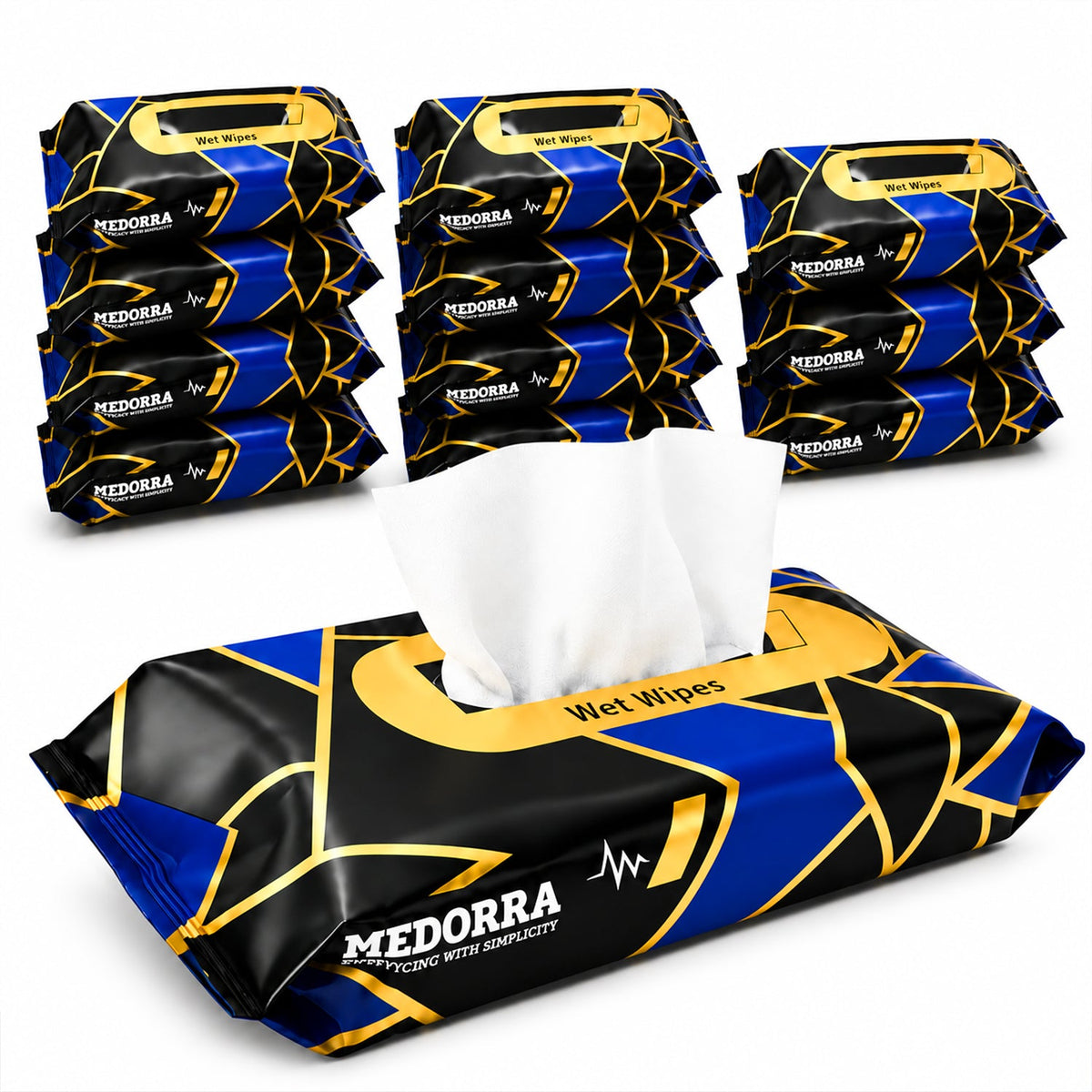
The size describes each wipe; the pack count describes the quantity you receive. A product labeled 8 × 12 inches with 12 packs of 50 contains 600 wipes in total. It does not mean 12 wipes or 600 separate retail packs. Write the full relationship on the order so receiving and purchasing count the same thing.
Size can affect how a product is handled and stored, but a larger area does not automatically prove that fewer wipes will be required for a task. Evaluate the product in the intended routine, following its directions, and gather feedback from the people using it. Compare price per wipe only after confirming that the product and use are genuinely comparable.
“Pre-moistened adult wipes, 8 × 12 inches, scented, 12 packs of 50 per case, SKU MED5PMAWS” identifies the product far more precisely than “adult wipes.” Confirm the current listing and label before purchasing.
Choose packaging that fits the routine
Look at how the package is opened, closed, carried and stored. A resealable format is useful only when it suits the way the product is handled. Ask users whether they can identify the product and close the package as instructed. Keep separate products clearly labeled rather than decanting them into unmarked containers.
Follow the manufacturer’s storage, closure and disposal instructions. Do not infer a disposal method from the word “wipe,” and do not assume a product can be flushed because another item in the range is described that way. Where local or facility disposal requirements apply, include them in the approval process.
A short checklist for a better wipe order
- Identify skin use, surface cleaning or surface disinfection.
- Review the exact product label and any required documentation.
- Confirm size, fragrance option and formulation where applicable.
- Record wipes per pack, packs per case and total wipes.
- Check storage and disposal directions.
- Keep the approved SKU and a clear photo together for reordering.
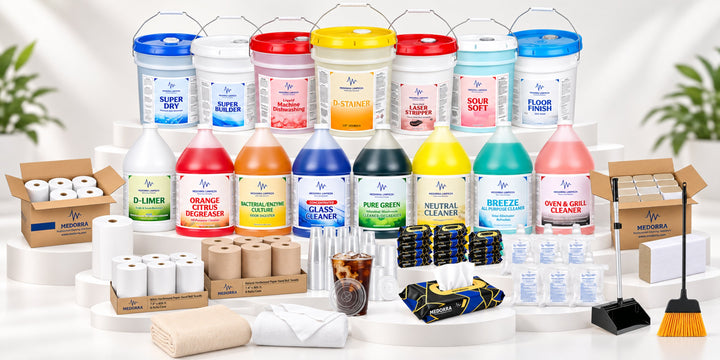
Medorra’s care and facility ranges cover different purchasing needs. Use the product details to choose an appropriate option, and ask for help when a label, pack or intended use needs clarification. For a facility, an approved product list is a better foundation than a shelf of look-alike canisters.
Make the purpose clear. Then choose the pack.
Explore adult-care wipes or discuss the products your facility has approved.
View adult wipe options →Discuss facility supplies →